
Build a Kitchen That Works Around You
A safer, easier kitchen often starts with workflow—not remodeling. Shorter reaches, clear landing zones, strong-side placement, sliding paths and reachable storage can reduce walking, bending, carrying and decision-making every time you cook.
Change the workflow before you change the kitchen.
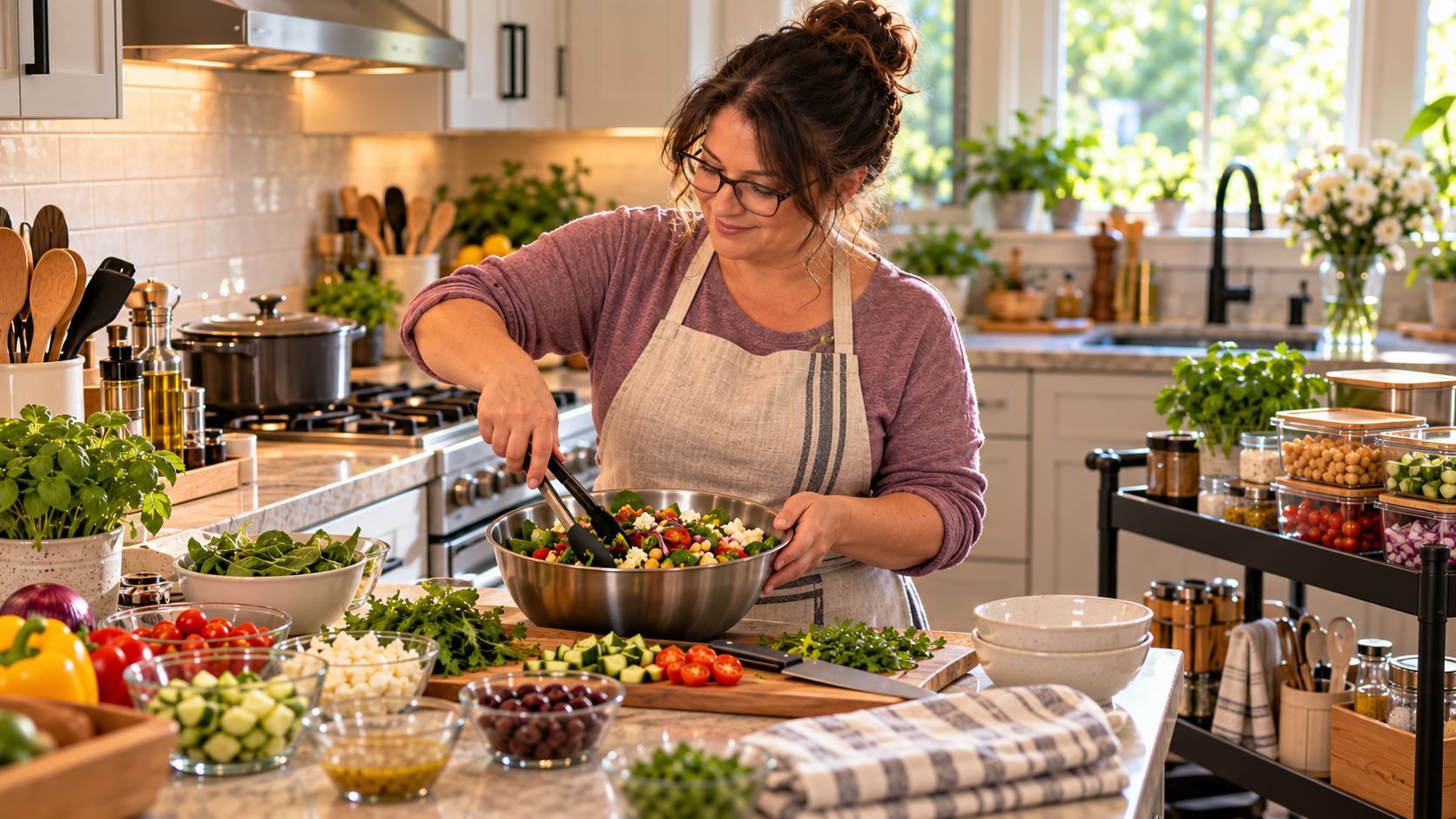
Start with the place where your body works best
Your ideal workstation may be a counter, island, dining table or wheelchair-height surface. Build around the position that gives you the best combination of reach, balance, visibility and control.
Keep essentials within one reach
Cutting board, shears, towel, seasonings, trash bowl and the next few ingredients should not require repeated trips across the kitchen.
Favor the stronger or more reliable side
Place knives, hot cookware, appliance controls and high-risk transfers where your control and awareness are most dependable.
Give finished items a destination
Create a clear “done” area so used ingredients, finished prep and plated food move in one direction instead of cluttering the working space.
Know where hot or heavy items are going before you pick them up
A landing zone is simply an empty, stable, heat-safe spot beside the appliance or cooking area.
Beside the microwave or air fryer
Keep a trivet or heat-resistant mat immediately adjacent so a hot basket or dish can be set down without carrying it across the room.
Beside the stove
Clear the clutter before cooking begins. Do not create a situation where you are holding a hot pan while deciding where it can safely go.
Slide more. Carry less.
When two work surfaces are level and the path is safe, sliding can reduce lifting demands. For longer distances, let wheels do the carrying.
Countertop transfer paths
Keep a clear route between prep, cooking and plating areas. Use stable mats or trays when they improve control.
Rolling kitchen carts
A cart with locking casters can move pantry items, dishes, groceries or small appliances in one trip instead of several carried loads.
Appliance sliders
For heavy countertop appliances that live near the wall, a sliding tray can bring controls forward without requiring you to lift the appliance.
Build an easier transfer system
Explore rolling kitchen carts, appliance sliders, non-slip mats and lightweight serving pieces that can reduce carrying and repeated trips.
The Equipment page includes Amazon affiliate links. Qualifying purchases may support Adaptive Kitchen at no additional cost to you.
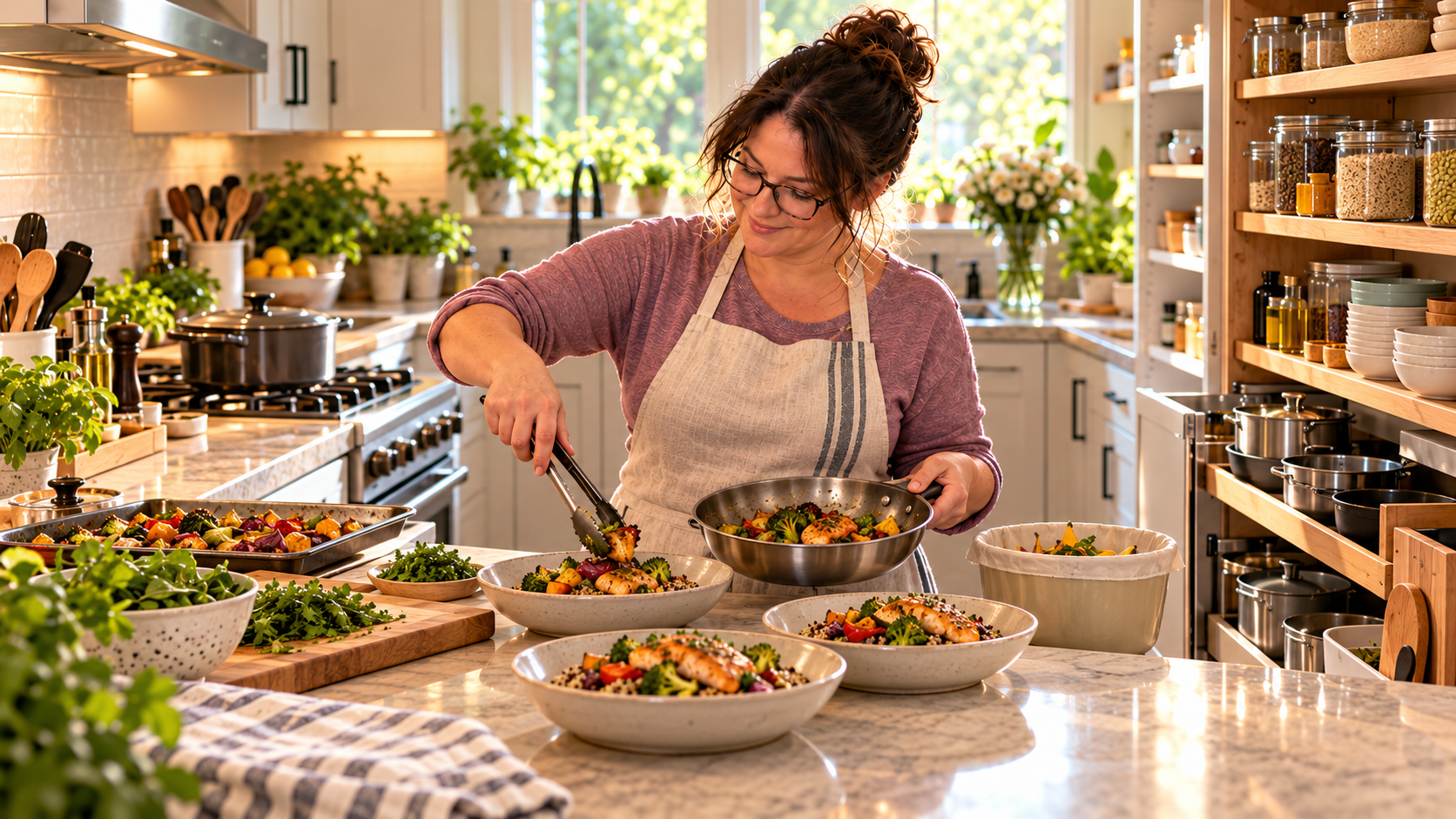
Store by frequency—not by tradition
The place where cookware has always lived is not automatically the place where it should live now.
Primary reach zone
Keep daily-use plates, spices, oils, lightweight cookware and favorite utensils in the easiest waist-to-shoulder or seated reach area available to you.
Secondary storage
Occasional tools can live farther away. Save the best real estate for the things you use every day.
Heavy items
Avoid high overhead storage for heavy objects. Store them where they can be slid, transferred or used in place with minimal lifting.
Make storage come to you
See Lazy Susans, pull-down cabinet shelves, magnetic storage, organizers and reach-assisting tools that can make everyday items easier to access.
The Equipment page includes Amazon affiliate links. Qualifying purchases may support Adaptive Kitchen at no additional cost to you.
Adapt the kitchen you already have
Many meaningful changes cost far less than cabinetry or construction.
Use a dining table as a seated prep station
Add a non-slip mat, cutting board, waste bowl and tray. A table can become an excellent temporary workstation without changing the counters.
Move appliances permanently
If an appliance is heavy, give it a safe permanent home at reachable height rather than lifting it out of a low cabinet every time.
Add removable organizers
Turntables, shelf risers, drawer bins and countertop containers can improve access without permanent installation.
Create a mobile station
A rolling cart can hold frequently used tools, ingredients or appliances and move with you through the kitchen.
Build one clear kitchen flow
A simple sequence reduces backtracking, carrying and mental load.
Tools for a better workstation
Browse organization, cleanup, rolling-cart, storage and reach-assisting tools that can help you build a kitchen around your actual workflow.
The Equipment page includes Amazon affiliate links. Qualifying purchases may support Adaptive Kitchen at no additional cost to you.
Your kitchen does not need to look “accessible” to work better
A clear prep zone, an empty landing spot, a rolling cart and better storage placement can change the experience of cooking without a renovation.
Start with the friction you feel most often and redesign that one task first.
Frequently Asked Questions
How can I improve my kitchen on a small budget?
Do I need to remodel for wheelchair or seated cooking?
Where should I put the things I use every day?
Should I place tools on my stronger side?
What is a landing zone and why do I need one?
What is the safest way to move a heavy pot?
Can I use a rolling cart as part of my workstation?
Can appliance placement make a big difference?
How should I store heavy cookware?
What if my kitchen is small?
Safety & care note: This guide is educational and not a substitute for individualized medical, occupational therapy or rehabilitation advice. Kitchen modifications should reflect your mobility, balance, strength, sensation, vision and transfer needs.
Make your tools part of the plan.
Browse the equipment list during Adaptive Kitchen setup and check the tools you have. Your saved equipment and cooking preferences help Recipe Studio discuss methods that fit your kitchen when you create or reimagine a recipe.
You can also ask the Chef about a specific recipe step while staying on the recipe. Use these workstation ideas alongside the methods and equipment you choose; the app does not replace your judgment about what you can safely reach or handle.