
Tips, Tricks & Hacks for Easier Cooking
Small changes can make a big difference in the kitchen. Explore practical techniques, shortcuts, organization ideas, and adaptive cooking strategies designed to reduce effort, improve safety, and make everyday cooking more manageable—whether you cook one-handed, from a seated position, with limited strength or mobility, or simply want an easier way to get meals on the table.
Build a Compact Prep Zone
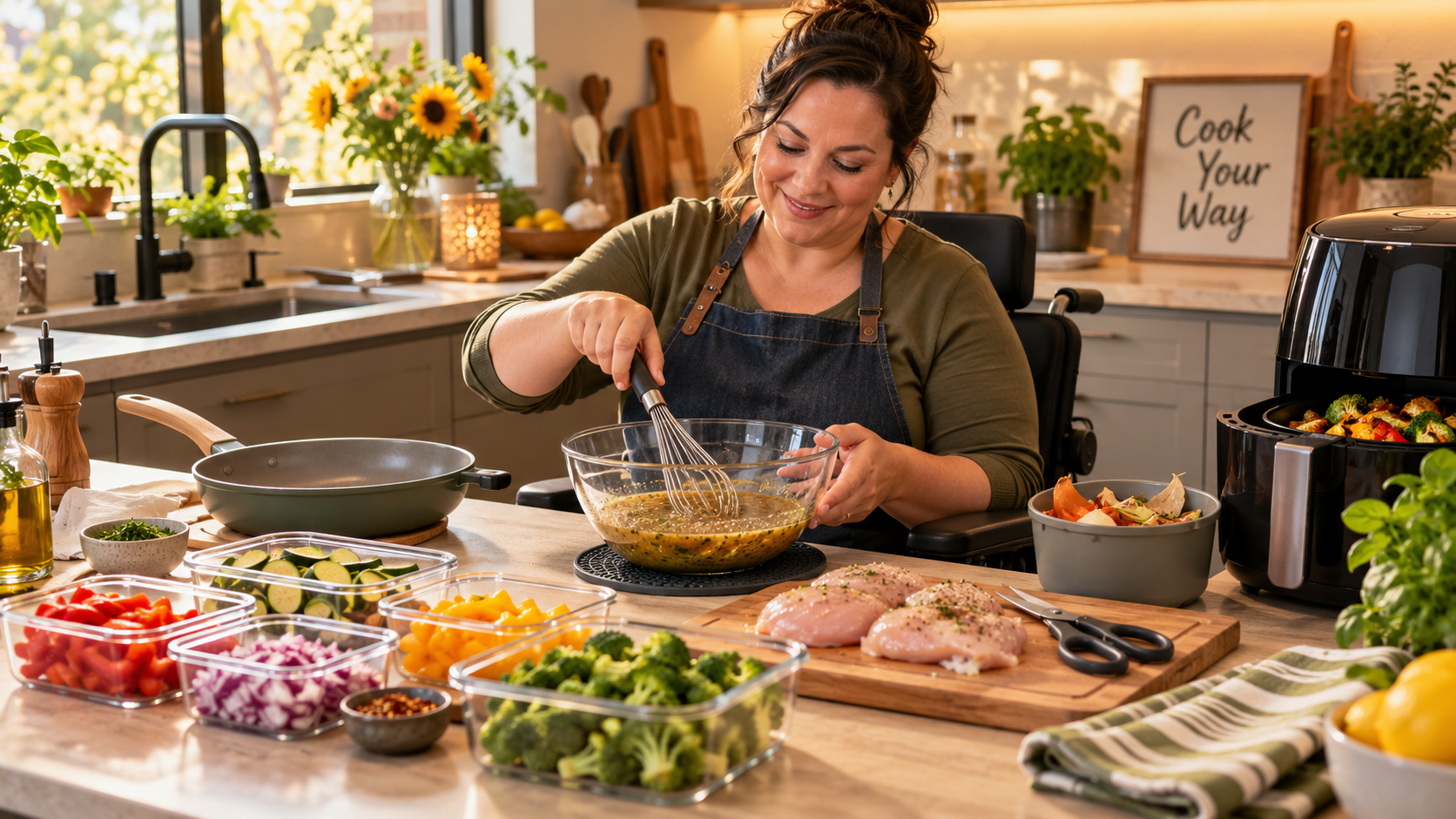
Bring the cutting board, ingredients, seasonings, utensils, trash bowl, and mixing bowl into one reachable area before you start. Fewer trips and repeated reaches can make a recipe feel much easier.
Use a Non-Slip Mat Under Bowls and Boards
A grippy mat can help keep a mixing bowl, cutting board, or small container from sliding while you work with one hand.
Keep Frequently Used Items in the “First Reach” Zone
Place the tools and ingredients you use most often between comfortable waist and shoulder height and within easy reach of your primary working side.
Set Up the Kitchen Before You Start
Open packages, gather utensils, position cookware, and measure ingredients before cooking. Preparing the workstation first reduces interruptions once heat or food preparation begins.
Use a Scrap Bowl Beside the Cutting Board
Keep a lightweight bowl nearby for wrappers, vegetable scraps, eggshells, and other waste. One collection point can eliminate repeated trips to the trash.
Work at a Comfortable Height
Whenever possible, choose a counter, table, or seated workstation that lets your shoulders stay relaxed and keeps the food close enough to handle without excessive reaching.
Browse non-slip mats and prep tools →The equipment page includes Amazon affiliate links. Qualifying purchases may support this initiative at no additional cost to you.
Use Kitchen Scissors Instead of a Knife
For boneless meats, herbs, tortillas, green onions, and many other foods, kitchen scissors can eliminate the need to stabilize food on a cutting board while slicing.
Try a Rocker Knife for Controlled Chopping
A rocker-style blade can allow a cook to chop with a rocking motion rather than repeatedly lifting and repositioning a conventional knife.
Use Food-Holding Features When Available
Cutting boards with spikes, clamps, corners, or other stabilizing features can help secure food so the working hand can concentrate on cutting or preparation.
Buy Pre-Cut Ingredients When They Save Effort
Pre-cut vegetables, sliced mushrooms, shredded cheese, and other prepared ingredients can remove repetitive chopping without changing the finished meal.
Cut Boneless Meat With Kitchen Shears
Place manageable pieces in a stable bowl or on a secure surface and use kitchen shears to portion boneless meat instead of trying to hold and slice it with a knife.
Prepare Ingredients in Small Batches
Rather than filling a large cutting board with everything at once, work through smaller quantities that are easier to control, move, and clean up.
Browse shears and one-handed prep tools →The equipment page includes Amazon affiliate links. Qualifying purchases may support this initiative at no additional cost to you.
Use a Hands-Free Jar Opener
A mounted or under-cabinet opener can stabilize a jar while you use your working hand to twist it, reducing the need to hold the container simultaneously.
Choose Cookware With Pour Spouts
A saucepan or small pot with a well-designed pour spout can make controlled transferring easier and reduce the need to tilt a large vessel awkwardly.
Use a Bench Scraper to Move Chopped Food
A bench scraper can gather chopped ingredients from a work surface and transfer them to a bowl or pan without requiring you to scoop with a knife.
Use Smaller Containers for Liquids
When a full bottle or large container is difficult to lift, transfer a manageable amount to a smaller vessel that is easier to control.
Stage the Destination Before You Pour
Put the receiving bowl, pan, or container in position before lifting or tilting anything. Avoid carrying a hot or heavy vessel farther than necessary.
Slide When You Can Instead of Lift
For compatible cookware and appliances, a stable transfer board or smooth sliding surface can reduce the need to lift heavy objects from one countertop position to another.
Browse opening and grip aids →The equipment page includes Amazon affiliate links. Qualifying purchases may support this initiative at no additional cost to you.
Choose Lightweight Cookware
Consider the weight of the empty vessel as well as the food and liquid it will hold. A lighter pan can be much easier to move, tilt, or clean.
Cook Where the Appliance Will Stay
If a countertop appliance is practical for a recipe, position it where you can use it without repeatedly moving it before and after cooking.
Use Countertop Appliances to Reduce Transfers
Slow cookers, air fryers, countertop ovens, and similar appliances can keep cooking at a comfortable height and reduce the need to move hot cookware.
Use a Slide Board for Heavy Appliances
A stable transfer board can make repositioning a countertop appliance easier when lifting it would be uncomfortable or impractical.
Break Long Recipes Into Rest Points
When a recipe has many stages, pause between tasks instead of treating the entire recipe as one continuous effort. Let ingredients cook while you rest and reset.
Keep Hot Food Close to Its Serving Destination
Whenever possible, cook and serve from the same general area so you don’t have to carry a heavy, hot vessel across the kitchen.
Browse lightweight cookware →The equipment page includes Amazon affiliate links. Qualifying purchases may support this initiative at no additional cost to you.
Build a Seated Prep Station
Bring the cutting board, trash bowl, ingredients, utensils, and seasonings into one reachable zone before beginning. This reduces repeated standing, reaching, and trips across the kitchen.
Keep Knee Space Clear
A comfortable seated workstation needs enough room beneath the counter or table for your legs and mobility equipment without forcing an awkward forward reach.
Use Countertop Appliances at Accessible Heights
Place frequently used appliances where controls, handles, and food compartments can be reached without excessive bending or stretching.
Keep the Working Surface Close
Bring ingredients toward your body rather than repeatedly leaning forward. A smaller active work area can be more manageable than spreading ingredients across the whole counter.
Use a Stable Perching Seat for Short Standing Tasks
For tasks that require occasional standing, a stable perching seat can provide a place to rest without completely leaving the workstation.
Plan the Route Before Moving Hot Food
Clear the path before lifting or transferring anything hot. The safest route is the one that requires the fewest obstacles, turns, and unnecessary movements.
Browse carts and organization tools →The equipment page includes Amazon affiliate links. Qualifying purchases may support this initiative at no additional cost to you.
Use Pre-Cut Vegetables
Pre-chopped onions, peppers, mixed vegetables, and other prepared produce can eliminate repetitive knife work while keeping vegetables central to the meal.
Keep Frozen Vegetables on Hand
Frozen vegetables require little preparation, keep well, and can make it easier to add vegetables without washing, peeling, and chopping every time.
Use Liquid Eggs When They Simplify Prep
Carton liquid eggs can eliminate cracking and shell cleanup and may be easier to portion for recipes that call for several eggs.
Keep Jarred Garlic and Prepared Sauces Available
Prepared garlic, marinara, pesto, salsa, and similar ingredients can remove several small preparation steps without preventing you from making a satisfying homemade meal.
Use Rotisserie Chicken Strategically
Pre-cooked chicken can become tacos, salads, sandwiches, casseroles, soups, and other meals without requiring you to cook and portion raw chicken every time.
Use Microwave Rice and Similar Ready-to-Heat Staples
Ready-to-heat grains and rice can provide a reliable base for meals while reducing cooking time, lifting, draining, and cleanup.
Browse tools that reduce preparation work →The equipment page includes Amazon affiliate links. Qualifying purchases may support this initiative at no additional cost to you.
Move More Cooking to the Countertop
When practical, countertop appliances can bring cooking closer to a comfortable seated or standing position and reduce dependence on a deep oven or low cooking surface.
Use an Air Fryer for Small-Batch Meals
An air fryer can handle many small meals and reheating tasks without requiring a large pan, extensive stovetop monitoring, or heavy cookware.
Use a Slow Cooker for Low-Attention Meals
Slow-cooker recipes can consolidate several steps into one vessel and allow food to cook while you step away from active preparation.
Use a Countertop Oven When It Reduces Reaching
A countertop oven can place baking and roasting tasks at a more convenient height. Choose a location where the door and tray can be handled safely.
Use an Induction Burner Where Appropriate
A portable induction burner can provide a separate cooking station at a convenient height and can be useful when the primary stovetop is difficult to access.
Let Automatic Shutoff Features Work for You
When choosing appliances, automatic shutoff and simple controls can reduce the need for constant monitoring. Always follow the appliance manufacturer’s safety instructions.
Browse countertop appliances →The equipment page includes Amazon affiliate links. Qualifying purchases may support this initiative at no additional cost to you.
Use a Mixing Bowl With a Non-Slip Base
A stable bowl can reduce sliding while stirring or mixing, allowing the working hand to concentrate on the utensil rather than holding the bowl.
Use Counterbalanced Measuring Spoons
Measuring tools designed to stay level can make scooping and portioning easier when only one hand is available.
Use Lightweight Measuring Cups With Comfortable Handles
A lightweight cup with a well-shaped handle can reduce grip demands when measuring liquids or dry ingredients.
Use a Digital Scale to Simplify Measuring
Weighing ingredients can reduce the number of measuring cups and spoons required and can make certain recipes more consistent.
Use Pop-Up Parchment Sheets
Pre-cut parchment sheets can eliminate wrestling with a roll and can make lining baking trays faster and easier.
Choose Flexible Silicone Bakeware When Appropriate
Flexible silicone molds can make release and cleanup easier while reducing the weight of traditional metal bakeware. Use them according to their heat and support requirements.
Browse stable bowls and lightweight cookware →The equipment page includes Amazon affiliate links. Qualifying purchases may support this initiative at no additional cost to you.
Use a Lazy Susan for Frequently Used Items
A rotating turntable can bring items from the back of a cabinet or refrigerator shelf forward without requiring you to reach deep into the space.
Store Everyday Items Between Waist and Shoulder Height
Reserve the easiest-to-reach zones for items you use often. Less frequently used equipment can live higher or lower.
Use Clear Containers When Practical
Visible containers make it easier to identify ingredients quickly and can reduce unnecessary opening, searching, and handling.
Group Ingredients by How You Use Them
Keep commonly paired ingredients together—for example, baking supplies, breakfast ingredients, or taco-night staples—so a meal requires fewer trips around the kitchen.
Use Pull-Out or Sliding Storage
Sliding shelves and baskets can bring stored items toward you instead of requiring deep bending, reaching, or searching inside cabinets.
Give Heavy Items a Permanent Home
Store heavier cookware and appliances where they will be used most often so you don’t have to repeatedly lift and relocate them.
Browse storage and organization tools →The equipment page includes Amazon affiliate links. Qualifying purchases may support this initiative at no additional cost to you.
Use a Collapsible Dish Basin
A lightweight collapsible basin can bring washing closer to a comfortable position and can be stored compactly when not in use.
Line Pans When It Makes Sense
Parchment, liners, or appropriate disposable pans can reduce stuck-on residue and simplify cleanup for suitable recipes.
Keep a Handheld Counter Vacuum Nearby
A small cordless vacuum can quickly handle crumbs and dry spills without requiring you to bring out a full-size vacuum.
Clean as You Go—But in Batches
Instead of constantly stopping to clean every tiny item, group compatible cleanup tasks together during natural pauses in the recipe.
Use a Lightweight Dish Rack With Drain Board
A stable rack can keep dishes organized while they drain and can reduce the need to carry wet dishes back and forth.
Keep Towels and Cleaning Supplies Within Reach
Position the items you use most often near the workstation so small spills can be handled immediately without unnecessary trips.
Browse cleanup and organization tools →The equipment page includes Amazon affiliate links. Qualifying purchases may support this initiative at no additional cost to you.
Cook Once, Use It More Than Once
Prepare a larger batch of a useful component—such as chicken, rice, vegetables, or sauce—and turn it into several different meals.
Portion Leftovers While They’re Still Easy to Handle
Move reasonable portions into lightweight storage containers before the food becomes another task to manage later.
Keep a Simple Weekly Meal Plan
A short list of meals can reduce decision fatigue and make grocery shopping more predictable. It does not need to be rigid to be useful.
Make a “Use First” Area
Keep foods that need to be eaten soon together in one visible refrigerator area so they are easier to notice and use.
Prepare Ingredients During Natural Downtime
While something is baking, simmering, or cooking in a slow cooker, prepare a small ingredient or container for the next meal instead of adding a separate prep session later.
Freeze Portions You Won’t Eat Soon
Freezing manageable portions can reduce waste and create ready-to-use meals for days when cooking energy is limited.
Browse slow cookers and countertop appliances →The equipment page includes Amazon affiliate links. Qualifying purchases may support this initiative at no additional cost to you.
Turn Pan Handles Inward
Position cookware handles so they do not extend into a walkway or create an easy snag point. Always follow the cookware and stovetop manufacturer’s guidance.
Keep Oven Mitts and Trivets Within Reach
Put heat-protection items where you can reach them before you need to move a hot pan rather than searching for them afterward.
Clear the Path Before Moving Hot Food
Remove obstacles, open doors, and position the destination before transferring anything hot. Avoid carrying hot cookware farther than necessary.
Use Long-Handled Utensils When They Improve Reach
Appropriately sized utensils can help keep your hands farther from hot food while stirring or serving. Choose tools that remain easy to control.
Use Stable Surfaces for Hot Cookware
Have a suitable trivet or heat-safe landing spot ready before removing a hot pan or dish from an appliance.
Know When to Stop and Ask for Help
If a task feels unstable, too heavy, too hot, or beyond your current ability, pause. Asking for assistance is part of safe adaptive cooking—not a failure of independence.
Browse lighter cookware and serving tools →The equipment page includes Amazon affiliate links. Qualifying purchases may support this initiative at no additional cost to you.
Store-Bought Shortcuts Without Shame
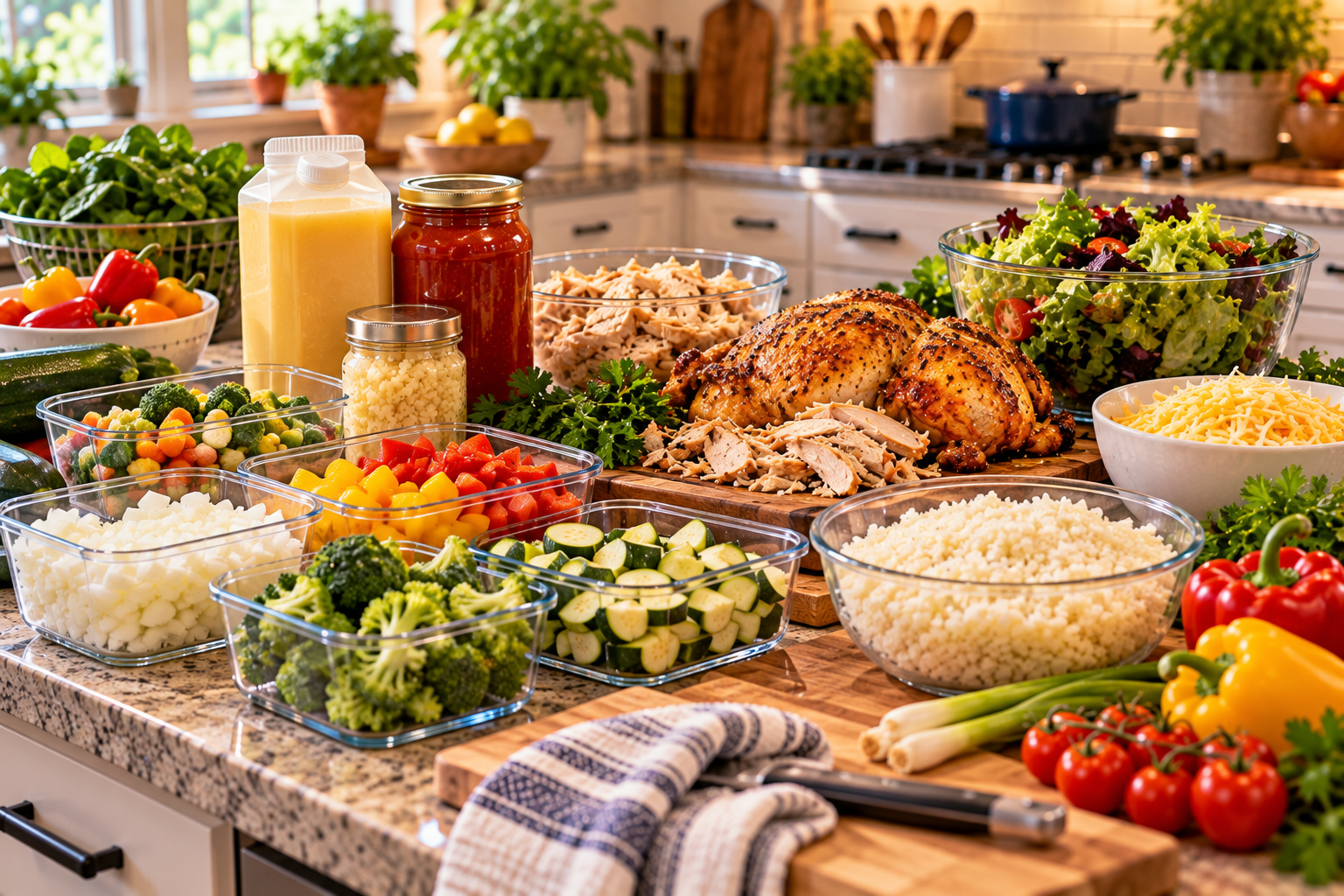
There is no prize for making dinner harder than it needs to be. Pre-cut vegetables, frozen foods, liquid eggs, prepared sauces, rotisserie chicken, microwave rice, and other convenience ingredients can be smart adaptive cooking tools. The goal is a satisfying meal—not proving that you did every step the hardest possible way.
Cook Responsibly. Protect Your Independence.
Use the techniques that fit your abilities, environment, and comfort level. Never push through a task that feels unsafe or beyond what you can manage. Ask for help when you need it. Keep working smoke alarms and an appropriate fire extinguisher readily available, know how to use your cooking appliances safely, and keep pathways around your cooking area clear. Adaptive cooking is about finding a safer, more manageable way to prepare food—not taking unnecessary risks.
Different Methods. Same Joy.
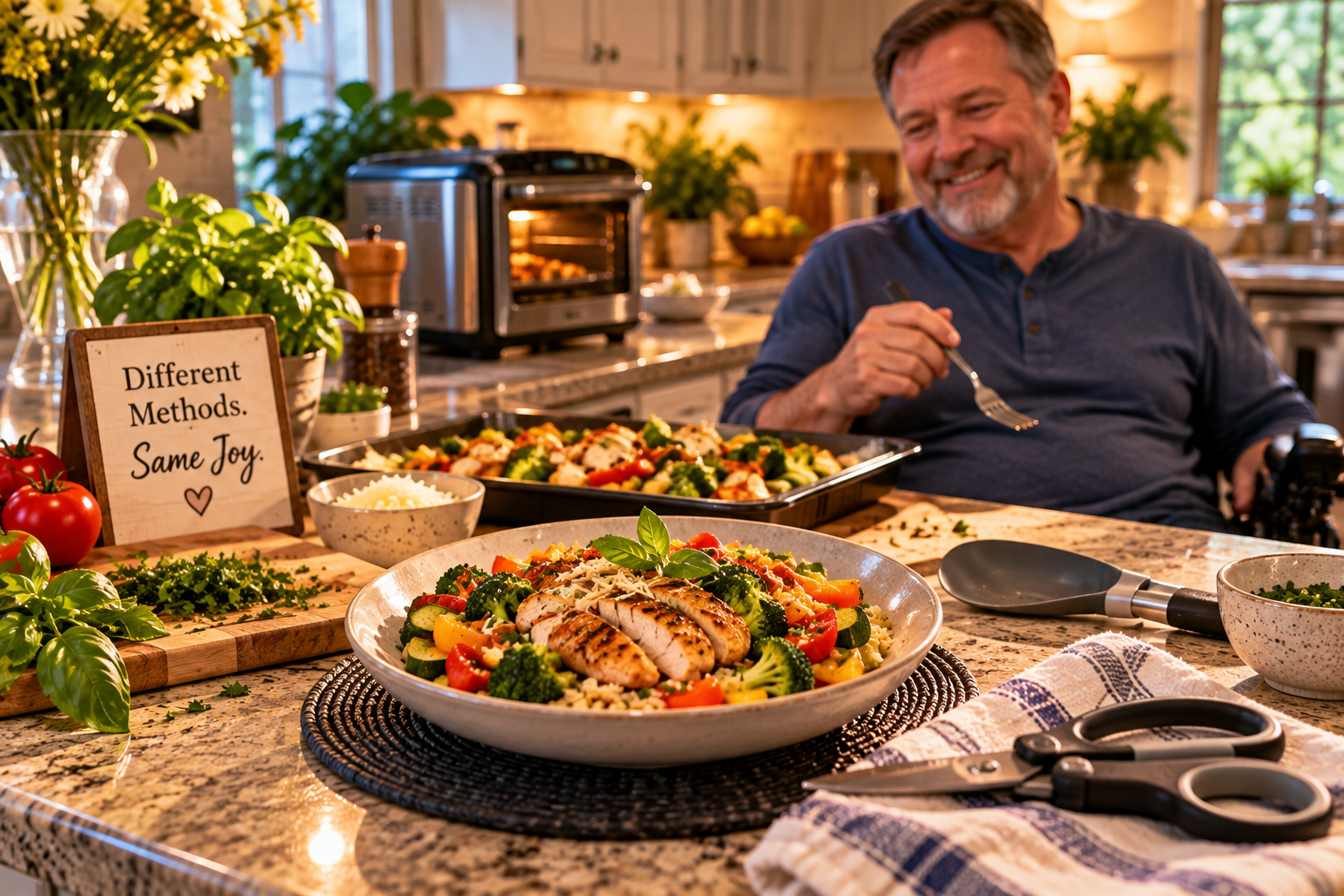
There is no single “right” way to cook. The best technique is the one that helps you prepare food safely, comfortably, and with confidence. Find what works for you, adapt when you need to, and remember that every meal you make is something worth celebrating.
Put the ideas to work in your own recipes.
Save your equipment, preferred methods and preparation shortcuts in Adaptive Kitchen setup. Recipe Studio can use those choices when you create a recipe or reimagine one you brought in through Recipe Portal.
Ask for less knife work, a different appliance or a simpler method. For advice about one ingredient or cooking step, use the small green Chef hat on the recipe to keep the discussion focused while the recipe stays in view.